If you’re weighing whether to sell your house as-is or make repairs first, you’re facing one of the most common decisions Southern Maryland sellers wrestle with — and there’s no single right answer. The best choice depends on your home’s condition, your timeline, and your finances. After 10+ years helping homeowners across Charles, Calvert, St. Mary’s, Prince George’s, and Anne Arundel Counties, I’ve guided sellers down both paths successfully. This is an honest breakdown of what selling as-is really means, what it costs you, what Maryland law requires, and when it’s the smart move — so you can decide with clarity instead of guesswork.
Table of Contents

What Selling As-Is Actually Means
Selling as-is means offering your home in its current condition — you’re telling buyers up front that you won’t make repairs or offer credits for issues they find during inspection. The buyer accepts the property as it stands. It does not mean hiding problems or skipping inspections; buyers can still inspect, they just can’t require you to fix what they find. For many Southern Maryland sellers — those with an inherited property, a home needing major work, or a tight timeline — it’s a legitimate, often smart path. The key is going in with clear eyes about what it involves.
What Maryland Law Requires You to Disclose
Whether you choose to sell my house as is southern maryland, it’s essential to evaluate your options carefully and ensure that you are making the best financial decision.
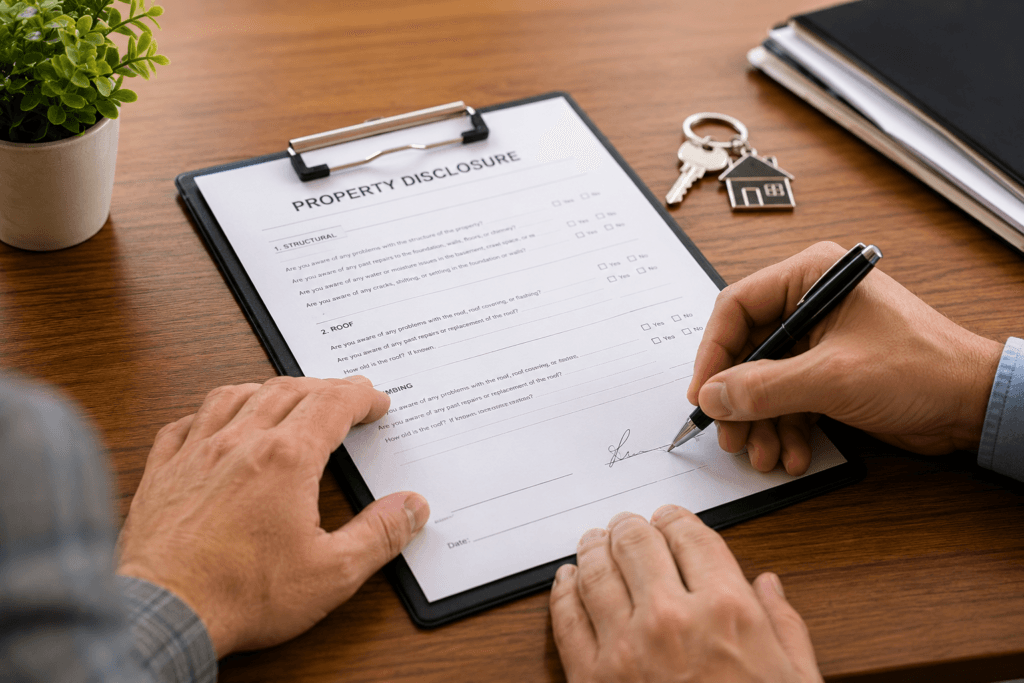
Here’s something many sellers don’t realize: selling as-is in Maryland does not free you from disclosure. Under Maryland’s residential property disclosure law, sellers choose between a disclosure statement (reporting known conditions) or a disclaimer statement (selling as-is without representations). But even when you choose the as-is disclaimer route, you’re still legally required to reveal known latent defects — hidden problems that aren’t visible on inspection and could affect health or safety.
In plain terms: “as-is” limits your obligation to repair, not your obligation to be honest. Failing to disclose a known serious defect can expose you to legal trouble even after closing. This is exactly the kind of thing I make sure every as-is seller understands before we list — and it’s worth confirming the specifics for your situation with your agent or a real estate attorney.
👉 Learn more: What Repairs Should I Make Before Selling My Home
The Pros of Selling As-Is
- Faster, simpler sale — no waiting on contractors or coordinating repairs before you list.
- No upfront repair costs — you keep your cash instead of sinking it into fixes before closing.
- Less stress — no managing renovation projects, especially valuable if you’re busy, relocating, or settling an estate.
- Attracts cash buyers and investors — these buyers expect to do the work, often pay cash, and can close fast.
The Cons of Selling As-Is
- Usually a lower sale price — buyers factor repair costs into their offers.
- Fewer traditional buyers — many retail buyers want move-in-ready, which narrows your pool.
- Harder post-inspection negotiation — buyers may use inspection findings to push the price down further.
One honest reframe worth knowing: many sellers fear an as-is sale means a steep discount. In reality, a well-priced as-is home in a desirable Southern Maryland location typically sells at a modest discount to renovated comparables — not the dramatic loss many expect. Condition, location, and pricing strategy all shape the gap. The right price and the right marketing keep that discount small.
Your Two Paths: Listing Publicly vs. a Cash Sale to Investors
When you sell as-is, you generally have two routes, and I help sellers weigh both honestly — including the fact that I buy houses for cash myself.
Listing to the public puts your home in front of the full market: retail buyers, investors, everyone. More eyes can mean more competition and, often, a higher price — but it usually involves showings, a little more time, and a buyer whose financing, inspections and appraisal has to clear.
A direct cash sale to investors is faster and simpler. There are no showings to coordinate, no financing contingency, and closings can happen in days rather than weeks. The trade-off is that cash/investor offers are typically below full retail, since the buyer is taking on the repairs and risk. For the right seller — someone who needs speed, certainty, or a true no-hassle exit — it’s an excellent fit.
Because I’m also a cash buyer, I can make you a direct offer. But my job is to make sure you get the best outcome, not just the most convenient one for me. That’s exactly how I handled a recent Waldorf sale: after walking the owner through both paths, we decided cash offers from investors made the most sense for their situation — but we still listed it publicly for a weekend first, to be certain we weren’t missing an investor outside my network who might pay more. That’s the kind of honest, no-pressure process every seller deserves.
👉 Learn more: Cash Home Buyers in Southern Maryland

My Honest Opinion on Cash Offers — and a Word of Caution
Let me be transparent about who I am: I’m an investor. When I buy a house for cash, I need to make a profit — that’s the business. But there’s a difference between making a fair profit and taking advantage of someone in a tough spot, and that line matters to me.
Here’s what most sellers don’t realize about cash offers. Many “we buy houses” operators are wholesalers — they put your house under contract at a low price, then sell that contract to another investor for a fee, often without ever owning or improving the home. It’s a largely unregulated corner of real estate, and while there are honest people in it, there are also plenty who are happy to lock up your property cheap and profit from your situation. Sellers who don’t understand how it works can lose tens of thousands of dollars by trusting the first cash offer that sounds easy.
So my advice is simple: understand what you’re being offered before you sign anything. A legitimate cash offer should be explained clearly — who’s actually buying, how the price was reached, and what you’re giving up in exchange for speed. If someone won’t walk you through that, that’s your answer.
Taking a cash offer from a large online company or a strictly cash buyer is rarely the move that nets you the most money. You pay for the convenience with a lower price. If ease and peace of mind genuinely matter more than maximizing your net, it can be the right choice — but for most homeowners with a livable, mortgageable house, you’ll do better exploring all your options first.
There are real exceptions where a cash sale truly is the smart path, and these are most of the homes I end up buying directly:
- Inherited properties — often dated or out of the area, where the heirs just want a clean, fast resolution.
- Hoarder or heavily distressed homes — more common than people realize, and tough to list traditionally without major cleanup.
- Homes needing major repairs you can’t fund up front — especially when the condition would disqualify the home from financing, so most retail buyers can’t get a mortgage to buy it anyway.
If your home fits one of those, a cash offer — including one from me — may genuinely be your best outcome. If it doesn’t, you owe it to yourself to see the full picture first. That’s the conversation I have with every seller, and it’s why I’ll sometimes tell you not to take my offer.
When Selling As-Is Makes Sense in Southern Maryland
As-is is the right call for some sellers and the wrong one for others. It tends to make sense when:
- Your home needs major repairs (roof, HVAC, foundation, septic) you can’t or don’t want to fund.
- You need to sell quickly — a job relocation, a PCS move, divorce, or settling an estate.
- You prefer minimal hassle and value certainty and speed over squeezing out top dollar.
- The cost of repairs would exceed the value they’d add back.
It makes less sense when your home needs only cosmetic updates — paint, flooring, minor kitchen or bath refreshes — that often return more than they cost and meaningfully widen your buyer pool.
Should You Sell As-Is or Make Repairs First?
The right answer depends on three things: your home’s condition, your timeline, and your finances. Sometimes a few targeted, low-cost improvements raise your final price more than enough to justify the effort. Other times, the faster, simpler as-is path is clearly the smarter move. The only way to know for sure is to look at your home’s current value and how buyers are responding to similar properties right now — which is exactly what I help sellers figure out, with no pressure either way.
👉 Learn more: How Much Will I Net When Selling My Home
James’s take: “There’s no universal right answer on selling as-is — there’s only the right answer for your home and your situation. I’ve had sellers net more by making three small fixes, and I’ve had sellers who were far better off taking a clean cash offer and moving on. My job isn’t to push you one way. It’s to walk your home with you, show you both paths honestly, and let you choose. Sometimes that means I write you a cash offer myself — and sometimes it means I tell you that you’ll do better listing it.” — James Armel
Frequently Asked Questions
Do I have to disclose problems if I sell my house as-is in Maryland?
Yes. Even selling as-is, Maryland law requires you to disclose known latent defects — hidden issues affecting health or safety that a buyer wouldn’t catch on inspection. As-is limits your duty to repair, not your duty to disclose. Confirm specifics with your agent or attorney.
Should I sell to a cash buyer or list my home?
For most homeowners with a livable, mortgageable home, listing nets more money than a cash offer — you pay for a cash sale’s speed with a lower price. Cash makes the most sense for inherited, heavily distressed, or unmortgageable homes, or when speed and certainty matter more than maximizing profit. Be cautious with unregulated “we buy houses” wholesalers, and make sure any cash offer is fully explained before you sign.
Will I lose a lot of money selling as-is?
Not necessarily. While as-is homes typically sell at some discount to fully renovated ones, a well-priced home in a good Southern Maryland location often sells for closer to market value than sellers expect. Pricing and marketing make a big difference.
Should I get an inspection before selling as-is?
A pre-listing inspection can be worth it. It tells you what buyers will find, helps you price realistically, and reduces surprises during negotiation — even though you’re not obligated to fix anything if going to the market. If selling directly to a cash buyer no need to inspect.
If you’re trying to decide whether to sell as-is, make repairs first, or take a cash offer, you don’t have to figure it out alone. I’ll walk your home with you, lay out every option honestly — including a direct cash offer if that’s your best path — and help you choose what actually fits your situation. No pressure, no obligation.
Not ready to talk yet? See what your home is worth today.