Buying a home in Howard County, Maryland means looking at one of the most sought-after markets in the state: consistently ranked among the best places to live in the country for its top-rated public schools, planned-community design, and a central location that puts both Baltimore and Washington, D.C. within easy reach. I help buyers navigate this Baltimore–D.C. corridor as a licensed Maryland agent who knows how the county’s distinct communities differ in price, commute, and lifestyle. This guide walks you through the areas, the commute, the lifestyle, and what smart buyers check before they make an offer here.
Whether you’re a first-time buyer, relocating for work at Fort Meade or NSA, moving up for the school system, or looking for anything from a Columbia townhome to a Clarksville estate, Howard County offers a wide range of communities at a wide range of price points. This guide walks you through the areas, the commute, the lifestyle, and what smart buyers check before they make an offer here.
🏆 14+ Years Experience Agent & investor across Maryland
⭐ Five-Star Rated Trusted by buyers & sellers
Licensed in MD & VA Serving buyers across Maryland
Table of Contents
Get the free Howard County Home Buyer’s Guide
A step-by-step guide to budgets, programs, timelines, and what to expect at closing, written for our local market.
Which Neighborhoods Should You Consider in Howard County?
Howard County’s communities range from the planned villages of Columbia and the historic streets of Ellicott City to luxury estates in Clarksville and Fulton and rural living out west. As a rule, Columbia and Elkridge offer the most accessible townhomes and condos, Ellicott City and Laurel cover family single-family homes, and Clarksville, Fulton, and Western Howard hold the high end. Here’s who each area tends to suit.
Howard County covers a lot of ground, from Columbia’s planned villages to historic Ellicott City, upscale Clarksville and Fulton, and genuinely rural land out west. Here’s an honest look at the main areas buyers ask me about, and who each one tends to suit.
Columbia
Columbia is Maryland’s second-largest community and the heart of the county: a planned city of ten villages designed in the 1960s by developer James Rouse, each with its own pools, trails, and village center. Expect townhomes, condos, and single-family homes across a broad price range, with Merriweather Post Pavilion, Lake Kittamaqundi, and The Mall in Columbia at the center. One thing every Columbia buyer should know: most homes carry the Columbia Association annual charge: a recorded lien based on your assessed value, separate from property tax: that funds all that green space and amenities.
Ellicott City
Ellicott City is the county seat and one of Maryland’s most distinctive towns: a historic Main Street of shops and restaurants alongside dense suburban neighborhoods and rural properties farther out. It draws families for some of the county’s highest-rated schools and easy access to I-70, Route 29, and Route 40. Important to know: the historic district along the Patapsco River has a real flood history, so any old-town property warrants a careful look at flood maps and insurance.
Clarksville and Highland
Quiet, upscale, and semi-rural, the Route 32 corridor (Clarksville, Highland, Dayton, Glenelg, Glenwood, and West Friendship) is among the most affluent parts of the county, known for larger lots, custom homes, and luxury estates. River Hill, one of Columbia’s newest and most sought-after villages, sits nearby. Buyers here are typically after space, top schools, and privacy.
Fulton and Maple Lawn
Hughesville offers larger lots and a more rural feel, with homes typically ranging from the $400s to $900s and some million-dollar properties. It’s a good fit for buyers who want more land and privacy, with the tradeoff being a longer commute to the job centers and bases.
Elkridge
Fulton sits at the southern end of the county, anchored by Maple Lawn: a planned community that blends upscale homes with retail, dining, and offices. Lot sizes run smaller, but the location and amenities make it one of Howard’s pricier areas, with the top end reaching well into the millions. Note that Maple Lawn homes carry their own HOA dues on top of any other community fees.
Laurel and Savage
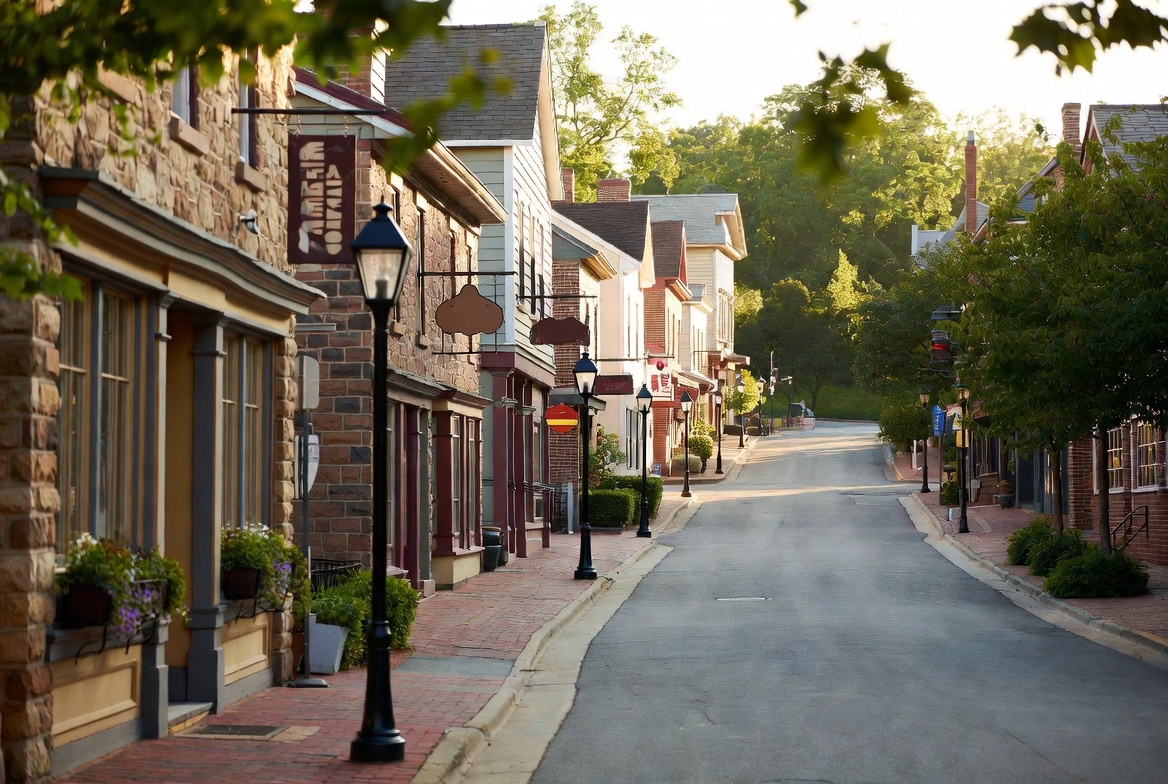
In the county’s eastern corner near I-95 and the BWI corridor, Elkridge is one of the more accessible entry points in Howard County, popular with commuters who want Howard County schools without the Ellicott City or Clarksville price tag. Expect townhomes, condos, and single-family homes, with quick access to Fort Meade, BWI, and Baltimore.
Western Howard County
Along the southern edge, North Laurel and historic Savage, with its restored mill village, offer some of the county’s more attainable single-family and townhome options. These areas are popular with commuters heading toward Fort Meade and the Route 1 corridor, and they put you close to the MARC Camden Line.
Rural and Waterfront Communities
West of Route 32, the county turns genuinely rural: farms, horse properties, and large lots around Lisbon, Woodbine, Cooksville, and Marriottsville. This is where buyers go for land and privacy, home to the Howard County Fairgrounds and the annual Maryland Sheep and Wool Festival. The tradeoff is a longer commute and, on most properties, well and septic rather than public utilities.
What’s the Commute Like from Howard County?
Howard County’s central location is a big part of its appeal: most of the county is 20–40 minutes from both Baltimore and Washington, D.C., with direct access to I-95, I-70, Route 29, Route 32, the B-W Parkway, and MARC commuter rail. Eastern Howard (Elkridge, Jessup, North Laurel) is closest to Fort Meade, NSA, and BWI; the Route 32 corridor connects the western communities. Where you land in the county shapes your daily drive.
Many people who move to Howard County are here for federal, defense, or tech work, and the commute is worth thinking through before choosing a community. The good news is that the county’s central position keeps both cities and major job hubs like Fort Meade and BWI, within a reasonable drive from most neighborhoods.
Be realistic about traffic. For D.C.-bound commuters, Route 29 and the B-W Parkway are the main arteries, with the MARC Camden Line running through Savage and Laurel. For Baltimore, I-95 and Route 29 north get you there in well under 40 minutes from most of the county. The farther west you go, the longer the drive: the price you pay for land and quiet.
Eastern Howard has its own commute advantage: Elkridge, Jessup, and North Laurel sit closest to Fort Meade, NSA, and the BWI business district, making them popular with defense and cyber workers who want a short drive to the bases and the airport corridor.
What’s It Like to Live in Howard County?
Howard County pairs suburban convenience with a lot of green space and culture. Columbia alone offers lakefront paths, pools, and trails maintained by the Columbia Association, while Patapsco Valley State Park, Centennial Park, the Howard County Fairgrounds, and Merriweather Post Pavilion give the county a strong mix of outdoor and arts options. Ellicott City’s historic Main Street and the Route 40 dining corridor add food and culture you won’t find elsewhere in the region.
One thing you notice quickly here: we’re surrounded by water. The county has plenty of marinas, public boat launches, and kayaking on the river, so if you’re into being on the water, you’ll have options. Many of the parks and natural areas are genuine local favorites, including a few that even longtime residents haven’t discovered.
Parks and Trails
Patapsco Valley State Park stretches along the county’s northern edge with hiking, biking, and river access, while Centennial Park’s lake loop and the Columbia Association’s nearly 100 miles of pathways give residents room to walk, run, and ride. Rockburn Branch and Schooley Mill Park round out a deep roster of public recreation.
Waterfront and Outdoor Adventures
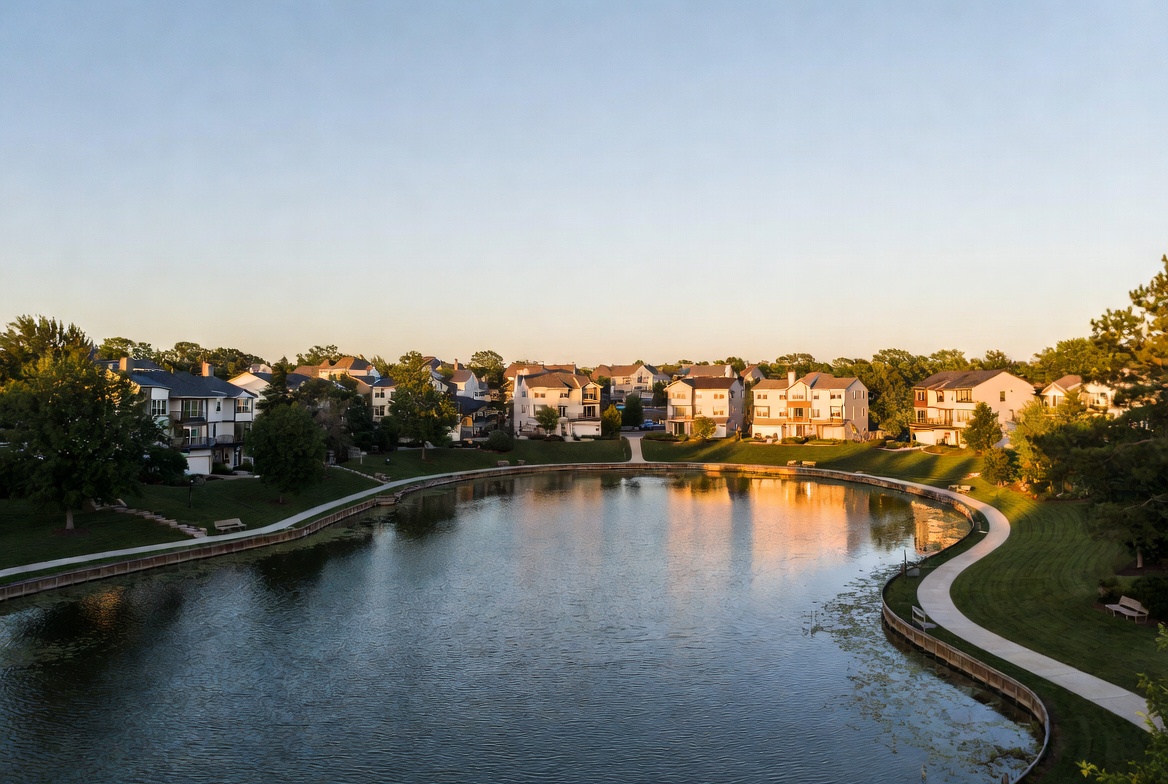
Columbia’s lakes (Kittamaqundi, Wilde Lake, and Centennial) offer boating, fishing, and waterfront paths in the middle of suburbia, a rare amenity for an inland county. Combined with the state park and county parks, there’s genuinely a lot of outdoor life here for a place this close to two major cities.
Dog Parks
Dog owners have several options, including popular dog parks at Worthington and Western Regional Park, plus the Columbia Association’s dog parks for members: worth knowing if a place for the dog to run is on your list.
Shopping, Dining, and Community
The Mall in Columbia anchors the county’s shopping, while Maple Lawn, downtown Ellicott City, and the Route 40 corridor (including a well-known Korean dining scene) give Howard a food and retail mix that punches above its size. Merriweather Post Pavilion brings nationally touring concerts to the county all summer.
Schools and Researching Your Move
Schools and neighborhood research are some of the most important factors for buyers, but they’re also personal: what matters most depends on your family and priorities. Rather than offer opinions, I always point buyers to the official sources so you can research the specifics that matter to you and draw your own conclusions.
For school information, the Maryland State Department of Education report card is the most authoritative source: reportcard.msde.maryland.gov. GreatSchools.org is another widely used resource for school details and parent reviews.
The Howard County Public School System is consistently ranked the best in Maryland and among the strongest in the nation: the single biggest reason many families buy here. School assignments depend on your specific address and can change with redistricting, so always confirm boundaries on the official district tools before you make an offer. I’m happy to help you cross-check this for any home you’re considering.
My role is to help you find the right home and neighborhood for your needs, and to make sure you have the official tools to research schools, safety, and community data yourself, so you’re making a fully informed decision.
What Are Home Prices Like in Howard County Right Now?
Howard County is one of Maryland’s more expensive markets, reflecting its schools and location, but the range is wide. Columbia and Elkridge townhomes and condos sit at the accessible end; single-family homes in Ellicott City and Laurel fill the middle; and Clarksville, Fulton’s Maple Lawn, and Western Howard estates run to the high end and beyond. For current figures based on Bright MLS data, reach out and I’ll pull the latest numbers for the specific communities you’re considering.
Pricing in Howard County is hyperlocal: the same budget buys very different homes depending on the village, school assignment, and whether the property carries a Columbia Association charge or HOA dues. Part of what makes the county work for so many buyers is that wide spread, from accessible condos to multimillion-dollar estates.
At the more affordable end, Columbia and Elkridge offer some of the lowest entry points in the county: townhomes and condos that get first-time buyers and commuters into the Howard County school system without an Ellicott City or Clarksville price tag.
In the middle and upper ranges, you’ll find a lot of variety. Ellicott City and Laurel cover a broad band of family single-family homes, while Clarksville, Highland, and Fulton’s Maple Lawn anchor the luxury end, where larger lots and custom homes reach well into seven figures. Western Howard’s farms and acreage are a market of their own.
The takeaway: whether you’re a first-time buyer looking at a Columbia townhome or searching for acreage and privacy out west, there’s likely a Howard County community that fits, and the right comparison is always your specific neighborhood and school district, not the county average.
How Does Buying a Home in Howard County Work?
Buying a home in Howard County follows five steps: get pre-approved with a lender, find your home and tour, make a competitive offer (often important in this tight, school-driven market), complete inspections and appraisal, then close and get your keys. A local agent makes each step smoother, especially writing a strong offer in competitive Howard neighborhoods and flagging the Columbia Association and flood-history checks unique to this county.
Buying a home here follows the same general path whether you’re in Columbia or out in Western Howard, but having someone who knows the local market makes each step smoother. The biggest difference in Howard County is competition for well-priced homes in strong school districts, where a clean, well-structured offer matters as much as the number.
- Get pre-approved with a lender so you know your budget and can make a strong offer. I can recommend local lenders I trust.
- Find your home: we’ll set up a search around your must-haves and start touring.
- Make an offer, and I’ll help you write something competitive and negotiate on your behalf.
- Inspections and appraisal: protect yourself by understanding the home’s condition and confirming its value. In rural areas, this is where well, septic, and perc-test questions come in (more on that below).
- Close, fund, and get your keys.
For a full walkthrough of each step: including financing options and first-time buyer programs, see my complete guide to buying a home in Maryland.
Why Should You Work With a Local Howard County Buyer’s Agent?
A buyer’s agent represents you, not the seller. When you’re buying a home in Howard County, working with an agent who knows this market gets you honest guidance on villages, school districts, and which homes are priced right, plus negotiation on your side in a competitive market and a network of trusted local lenders, inspectors, and title companies. As an active investor across Maryland, I bring a sharp eye for value and resale potential.
A buyer’s agent represents you, not the seller. Working with an agent who knows Howard County means honest guidance on which villages and school districts fit your budget, hard negotiation on your behalf in a competitive market, and a trusted network of local lenders, inspectors, and title companies to get you cleanly to closing.
A Word on New Construction
Howard County has active new-construction communities, especially in Fulton, Elkridge, and the western county, and they can be a great option: a brand-new home, often with builder concessions. One thing builders won’t tell you: their on-site agent works for the builder, not for you. Bring your own buyer’s agent to the first visit: it costs you nothing and means someone is protecting your interests on price, upgrades, warranties, and timelines.
What Smart Buyers Check in Howard County
Before buying in Howard County, check a few local details: the Columbia Association annual charge (a lien-backed assessment on most Columbia homes), flood history in historic Ellicott City and along the Patapsco, well and septic on rural Western Howard lots, and HOA dues in newer planned communities like Maple Lawn. Knowing these up front prevents expensive surprises at settlement.
Every market has its quirks, and Howard County is no exception. These are the things I find myself explaining to buyers again and again: the kind of local detail that saves you money and headaches down the road. The biggest one, if you’re looking in Columbia, is the Columbia Association annual charge: a recorded lien calculated on 50% of your assessed value, due on top of property tax and any HOA dues. It funds the pools, paths, and green space, but budget for it as an ongoing cost.
Well and Septic
A lot of newer buyers here have never owned a home with a well or septic system, and the rural parts of the county are full of them. The tradeoffs: no water bill, and a septic system can last a long time if it’s taken care of. Honestly, I prefer well and septic over public sewer. But both can be expensive to repair or replace, so they’re worth understanding before you buy. Hard water is common in the area but can be treated with filters, and it’s smart to test your well water yearly to stay ahead of any bacteria. One thing to watch for is a shallow well: these don’t go as deep, which can cause water-flow issues and makes contamination more likely.
Septic is where I’d urge real caution. Even as an investor who often buys homes without a full inspection, I still add a septic contingency. If a septic system fails, you could be looking at $25,000, and I’ve seen as high as $75,000, for a BAT (Best Available Technology) system. Worst case, if the land fails a perc test and a drain field won’t work, you may have to install a holding tank, which has to be pumped regularly, adds ongoing cost, and drops the home’s value because most buyers won’t even consider a home with one. It’s worth knowing all of this before you make an offer on a rural property.
Flooding and Waterfront
Flooding is worth checking, especially around historic Ellicott City along the Patapsco, which has a documented flood history including serious recent floods. Much of greater Ellicott City sits well away from the flood zone, so it comes down to the specific property: check the flood maps and insurance requirements before you fall for an old-town home.
HOA Dues and County Fees
If you’re buying in one of the newer developments like Maple Lawn, factor in HOA fees: an additional cost on top of your mortgage, and HOAs can and will enforce their rules. And remember that Howard County’s property taxes are among the highest in Maryland, so ask early what a specific home’s total monthly carrying cost looks like: taxes, HOA, and any Columbia Association charge.
Do I need 20% down to buy a home in Howard County?
No. Many buyers use loan programs that allow far less than 20% down, and there are first-time homebuyer programs in Maryland that can help with down payment and closing costs. The right option depends on your situation: I can connect you with local lenders who handle these every day.
What should I know about homes with well and septic systems?
A lot of rural Western Howard County homes have well and septic instead of public water and sewer. They come with real advantages: no water bill, and a septic system can last a long time if maintained, but repairs or replacement can be costly. It’s smart to test well water yearly, watch out for shallow wells, and always include a septic contingency, since a failed system can run $25,000 or more
How bad is the commute from Howard County to Baltimore or DC?
Most of Howard County is 20–40 minutes from both Baltimore and Washington, D.C., using I-95, Route 29, the B-W Parkway, and the MARC train. Eastern Howard sits closest to Fort Meade, NSA, and BWI, while western communities trade a longer drive for more land and privacy. Where you live in the county is the biggest factor.
Is Elkridge a good area for first-time buyers in Howard County?
It’s one of the most affordable options in the county, which is why first-time buyers ask about it constantly: but it’s important to know it’s a co-op, not traditional fee-simple ownership. That means you don’t own the land, financing is harder to find, and the co-op must approve you before you can move in. It can work for the right buyer, but go in understanding exactly what you’re purchasing.
What extra costs should I budget for beyond the mortgage?
Beyond your mortgage, factor in HOA dues if you’re in a newer development, plus Howard County’s recordation and transfer taxes, which aren’t optional. In rural areas, budget for well and septic maintenance. I’ll help you understand the full picture for any home you’re considering.
Should I use the builder’s agent when buying new construction?
I’d strongly recommend having your own buyer’s agent. Builders push their in-house agent, lender, and title company because it serves their interests, not yours. With homes going up fast, you want someone on your side at every step to catch mistakes.
Ready to Find Your Home in Howard County?
Whether you’re just starting to explore neighborhoods or ready to tour homes, I’d love to help you find the right fit, and steer you clear of the pitfalls that catch out-of-area buyers in this competitive, school-driven market.
📞 Call or text: (301) 751-9318. Or fill out the form below and I’ll be in touch.
👉 Learn more: Buyer Closing Costs in Maryland: What You’ll Pay at Closing by County — verified county-by-county tax rates, lender fees, and the first-time homebuyer transfer tax exemption.
👉 Before you start shopping, use our free Maryland mortgage calculator to estimate your monthly payment at different price points and down payments.
Prefer to Talk First? Book a Free 30-Minute Call
Pick a time that works for you, no pressure, no obligation.
Or fill out the form below and James will reach out same day.
If you are still deciding which agent to work with, the best realtor in Howard County Maryland page covers what to look for, how James approaches each community, and what questions to ask before signing a buyer agreement.
Two Licensed Sets of Eyes on Your Purchase
When you work with me, you also get Aimee, my licensed executive assistant, born and raised in Maryland and a licensed agent with over a decade of experience. Once you’re under contract, she tracks every deadline and contingency, coordinates with title and lenders, and is your immediate backup whenever I’m out showing homes. Two licensed professionals watching every detail means a smoother, lower-stress path to closing.